Building Emotional Intelligence in Toddlers and Preschoolers: The Complete Parent's Guide
The years between one and five are one of the most powerful windows in your child's entire life for building emotional intelligence in toddlers and preschoolers. Your little one is learning, sometimes in a single afternoon, how to feel a feeling, name it, manage it, and respond to it — all while their brain is developing at a pace it will never quite match again. It can look messy from the outside (hello, grocery store meltdowns), but those big emotions are actually a sign that important work is happening. The good news? You don't need a psychology degree or a special curriculum. You just need to know where to focus your energy — and a few simple, playful activities to make it stick.
Why Building Emotional Intelligence Matters for Early Development
For decades, researchers have studied what predicts success and wellbeing in children — not just academically, but in friendships, mental health, and life satisfaction. What they keep finding is that emotional intelligence (the ability to recognize, understand, manage, and respond to emotions in ourselves and others) matters enormously. Psychologist John Gottman's research found that children with emotionally intelligent parents had better physical health, stronger friendships, higher academic achievement, and fewer behavioral problems. And the foundation for all of this is laid in early childhood, right in the middle of the ordinary moments of your day.
For toddlers between 12 and 36 months, development is all about beginning to name feelings and learning that emotions are survivable — that when you feel something big, it passes, and the people who love you stay. Preschoolers between three and five are ready for more: understanding that other people have feelings too, developing basic self-regulation tools, and starting to make the connection between their inner world and their behavior. Researchers call this the development of emotional literacy and self-regulation, and studies consistently show that children who develop these skills early are better equipped to handle stress, navigate social situations, and thrive in school environments.
What's especially encouraging is that emotional intelligence isn't a fixed trait your little one either has or doesn't have. It's built — through repetition, language, play, and connection. Every time you name an emotion out loud, every time you help your child breathe through a hard moment instead of just shutting it down, every time you read a book and ask "how do you think she feels?" — you are actively building neural pathways that will serve your child for life. This guide will show you exactly how to do that, age by age, moment by moment.
Key Skills Your Child Develops
Emotional Vocabulary
Before your little one can manage a feeling, they need a word for it. Young children who have a rich emotional vocabulary — words like frustrated, nervous, embarrassed, proud, and jealous — are measurably better at calming down during difficult moments. Why? Because naming an emotion literally reduces its intensity in the brain. When a feeling has a label, it becomes less overwhelming and more manageable. This is sometimes called "name it to tame it," a phrase popularized by neuropsychiatrist Dan Siegel.
Building emotional vocabulary doesn't require flashcards or lessons. It happens in conversation, in play, and in books. When you pause during a story and ask your child how a character might be feeling, or when you play a game of Feelings Charades where you take turns acting out emotions with your face and body, you are adding new words to their emotional toolkit. Every new feeling word your child learns is a tool they can reach for instead of just reacting.
Self-Regulation
Self-regulation is the ability to manage your own emotional state — to calm down when you're upset, to tolerate frustration, to wait for something you want. It is arguably the single most important emotional skill your child will develop in the preschool years, and it does not come naturally. Young children's brains are literally not wired for it yet; the prefrontal cortex, which governs impulse control and emotional regulation, isn't fully developed until the mid-twenties. That means your child isn't being deliberately difficult — they genuinely need your help building these skills over time.
The great news is that self-regulation is highly teachable through play and practice. Breathing techniques like the Balloon Belly exercise — where your child learns to breathe in slowly through their nose and out through their mouth — give them a concrete physical tool to use when emotions start to feel too big. Practiced when things are calm, these strategies become automatic when things get hard. Similarly, tools like the Cool-Down Countdown — counting backward from five with slow breaths, lowering one finger at a time — give children a ritual to anchor themselves when they're getting overwhelmed.
Empathy and Perspective-Taking
Empathy — the ability to understand and share the feelings of another person — begins developing in the toddler years and expands dramatically during the preschool period. Around age three, children begin to genuinely grasp that other people have inner lives that are different from their own. This is a huge cognitive and emotional leap, and it's one you can actively nurture. Empathy is the root of kindness, cooperation, friendship, and conflict resolution. Kids who develop strong empathy skills are more likely to be well-liked by peers, have positive relationships with teachers, and show fewer aggressive behaviors.
You build empathy by making it a habit to talk about how other people feel. Pausing during a picture book to ask "how do you think he feels right now?" or using the Empathy Builder activity — looking at a face in a book or on a show and guessing how that person might feel — teaches perspective-taking in a way that feels like play. Connecting those observations to your child's own experience («Remember when that happened to you?») makes empathy personal and real.
Resilience and Coping Skills
Resilience isn't the absence of struggle — it's the ability to bounce back from it. For young children, resilience is built through small experiences of handling disappointment, frustration, and fear and discovering that they survived. Research from Harvard's Center on the Developing Child identifies strong coping skills and a reliable relationship with at least one caring adult as the two most critical factors in building resilience in early childhood. You're already providing the second one. Activities and conversations that help children practice the first are the next piece.
Teaching your little one to take a breath and try again after something goes wrong — as in the Bounce Back activity — or to shrug and say "oh well" with the Oh Well exercise when something small doesn't go their way, gives children a felt sense that setbacks are survivable and manageable. Over time, these small moments add up to a deeply held belief: I can handle hard things.
Self-Awareness and Body Awareness
Before children can regulate emotions, they need to notice them. Self-awareness — the ability to recognize what you're feeling and how it shows up in your body — is a foundational emotional skill that many adults are still working on. Young children are particularly responsive to body-based approaches because they experience emotions physically long before they process them cognitively. The stomach clenches before the brain thinks "I'm nervous." The face flushes before the thought «I'm angry» forms.
Helping your child map emotions onto physical sensations is a powerful way to build self-awareness early. The Feelings in My Body activity does exactly this — drawing a simple body outline and asking your child where they feel anger, worry, happiness, and sadness, then coloring each spot. It turns abstract emotions into concrete, visible experiences. When you then reference that map in real moments («Where are you feeling that right now?»), you're helping your child develop an inner monitoring system that will serve them throughout life.
Social Skills and Healthy Boundaries
Emotional intelligence isn't just about managing your own feelings — it's also about navigating relationships with other people. For toddlers and preschoolers, this means learning to take turns, share, apologize genuinely, ask for help, and respect others' boundaries (and their own). These skills don't come packaged with childhood. They are practiced, imperfect, and gradually internalized through real social experiences and intentional guidance from the adults in a child's life.
Practicing a real three-part apology — what I did, how you probably felt, what I'll do next time — as in the Real Sorry activity, teaches children that repairing relationships is something they have power over. Likewise, activities like My Space Bubble — where your child practices stretching their arms out to define their personal space and saying «I need space, please» — build the language and confidence to advocate for themselves in a kind, clear way.
Activities by Age
Ages 1–2: Laying the Foundation
At this age, emotional intelligence work is simple and relational. Your primary job is to name emotions as they happen («You're frustrated that the block won't stack — I see that»), offer physical comfort, and model calm responses to your own feelings. Toddlers in this range are building attachment and beginning to understand cause and effect — including the cause-and-effect of emotions. Pretend play is a wonderful gateway into emotional exploration at this age.
The Doctor Visit activity is a perfect entry point — walking through a pretend check-up with a stuffed animal makes potentially scary real-world experiences feel familiar and manageable, which is early emotional preparation in action. The activity is simple: pretend to listen to the teddy's heart, look in its ears, check its throat. Then connect it to the real world: «They do the same thing to keep you healthy!» This kind of rehearsal through play reduces anxiety and builds a sense of safety and predictability, which is the emotional bedrock everything else is built on.
At this age, the most powerful thing you can do alongside any activity is narrate emotions — yours and your little one's — in real time. «You look happy when we splash in puddles.» «I feel tired today — that's okay, I'll rest and feel better.» You're building the vocabulary and the awareness that will power everything that comes later.
Ages 2–3: Naming and Noticing
Two-year-olds are famous for big feelings and limited words to express them. The work of this age band is expanding emotional vocabulary and beginning to introduce the idea that feelings can be named and managed — not just experienced as a flood. Keep activities short, physical, and playful. Sitting still for long explanations won't work, but making a silly angry face together absolutely will.
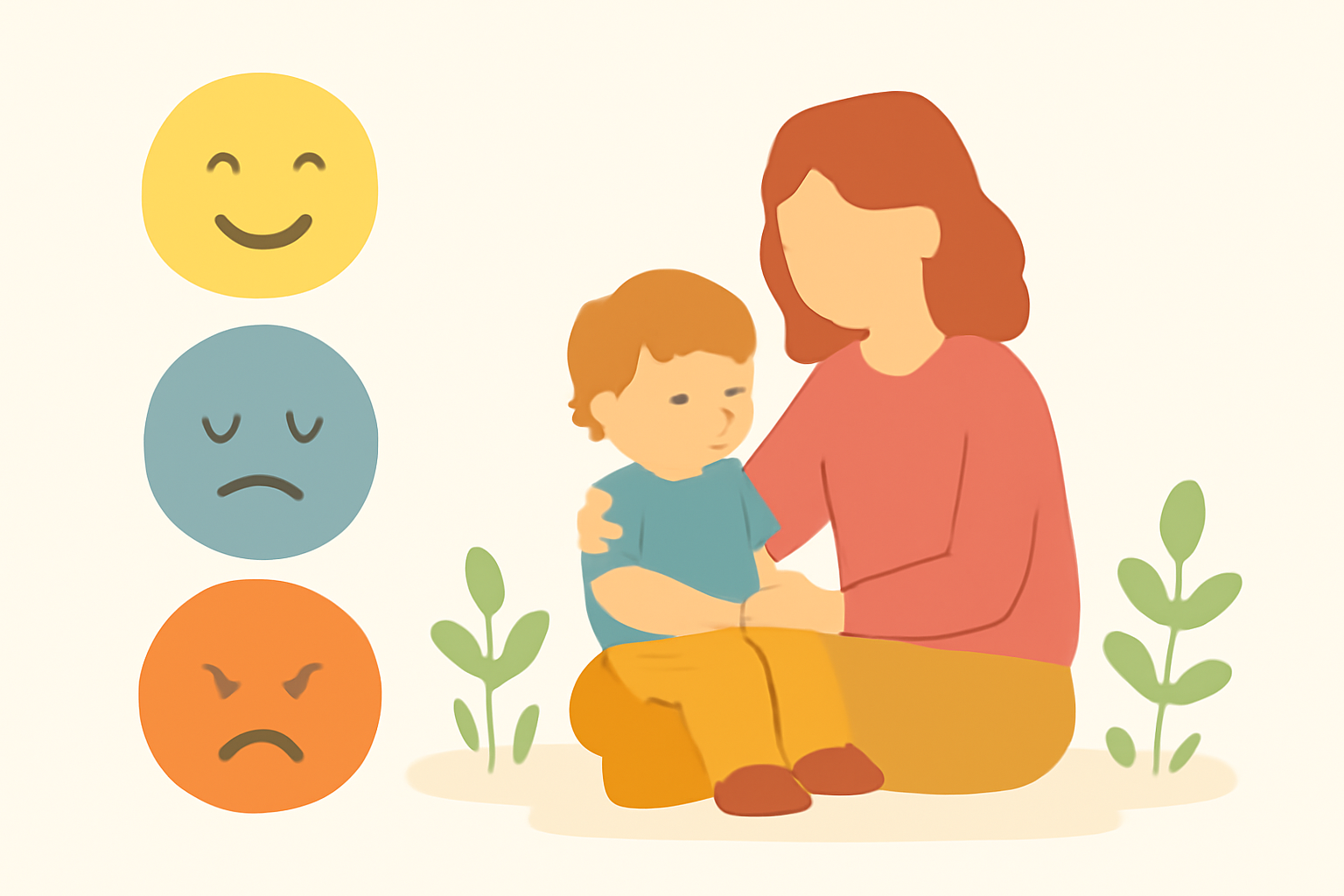
The Big Feelings activity is tailor-made for this age: name four core emotions together — happy, sad, angry, frustrated — and make the face for each one. It's playful (making faces is inherently fun for a two-year-old), embodied (they feel the emotion in their face), and educational. Ending with «all of these feelings are okay — the trick is knowing what you're feeling» plants an important seed: emotions are not scary or bad. They're information.
This is also a good age to introduce basic breathing tools, especially when practiced during calm moments. The Respect Practice activity — using everyday moments to practice please, thank you, and excuse me — begins to weave social-emotional language into the fabric of daily life without it feeling like a lesson. Role-playing these phrases with stuffed animals makes it feel like the game it is.
Ages 3–4: Building Tools and Vocabulary
This is a rich age for emotional intelligence work. Three- and four-year-olds are genuinely curious about feelings, can begin to hold more than one emotion at once (mixed feelings!), and are ready to practice real coping strategies. They are also deepening their empathy, beginning to understand that other people's experiences are different from their own. This is the age when consistent, playful emotional practice really starts to compound.
The Balloon Belly breathing technique is a cornerstone for this age. Sitting down together, breathing in through the nose to fill the belly «like a balloon» and breathing out slowly through the mouth — with fun whoooosh sound effects — gives children a concrete, body-based tool they can actually use when emotions run high. The key is practicing it regularly when things are calm, so it becomes a reflex during harder moments.
The Feelings in My Body body-mapping activity is another excellent fit for this age. Three- and four-year-olds are old enough to reflect and articulate («my tummy feels tight when I'm scared»), and the drawing element makes it engaging and concrete. Once your child has made their feelings map, you can refer back to it throughout the week: «Is that the tight-tummy feeling? Where is it right now?»
The Gratitude Moment practice — naming three things you're each thankful for at dinner or bedtime — also fits beautifully into this age band. Research on gratitude consistently shows it boosts wellbeing and positive emotion even in young children. Keep it light: everything counts, including being grateful for pizza.
Ages 4–5: Growing Complexity and Confidence
Four- and five-year-olds are ready for more nuanced emotional work. They can understand complex feelings like jealousy, embarrassment, and loneliness. They can think about future consequences, practice multi-step strategies, and begin to take genuine pride in emotional growth. They are also increasingly social, which means their emotional skills are being tested constantly in peer interactions. This is a great age to introduce activities that build emotional confidence and independence.
The All by Myself activity — where your child picks one small task to do completely alone and you step back and let them struggle just enough to feel the pride of completion — is a powerful builder of self-efficacy at this age. Asking «You did that all on your own — how does that feel?» after the task connects accomplishment to the internal experience of pride and capability. That connection is the beginning of genuine self-confidence.
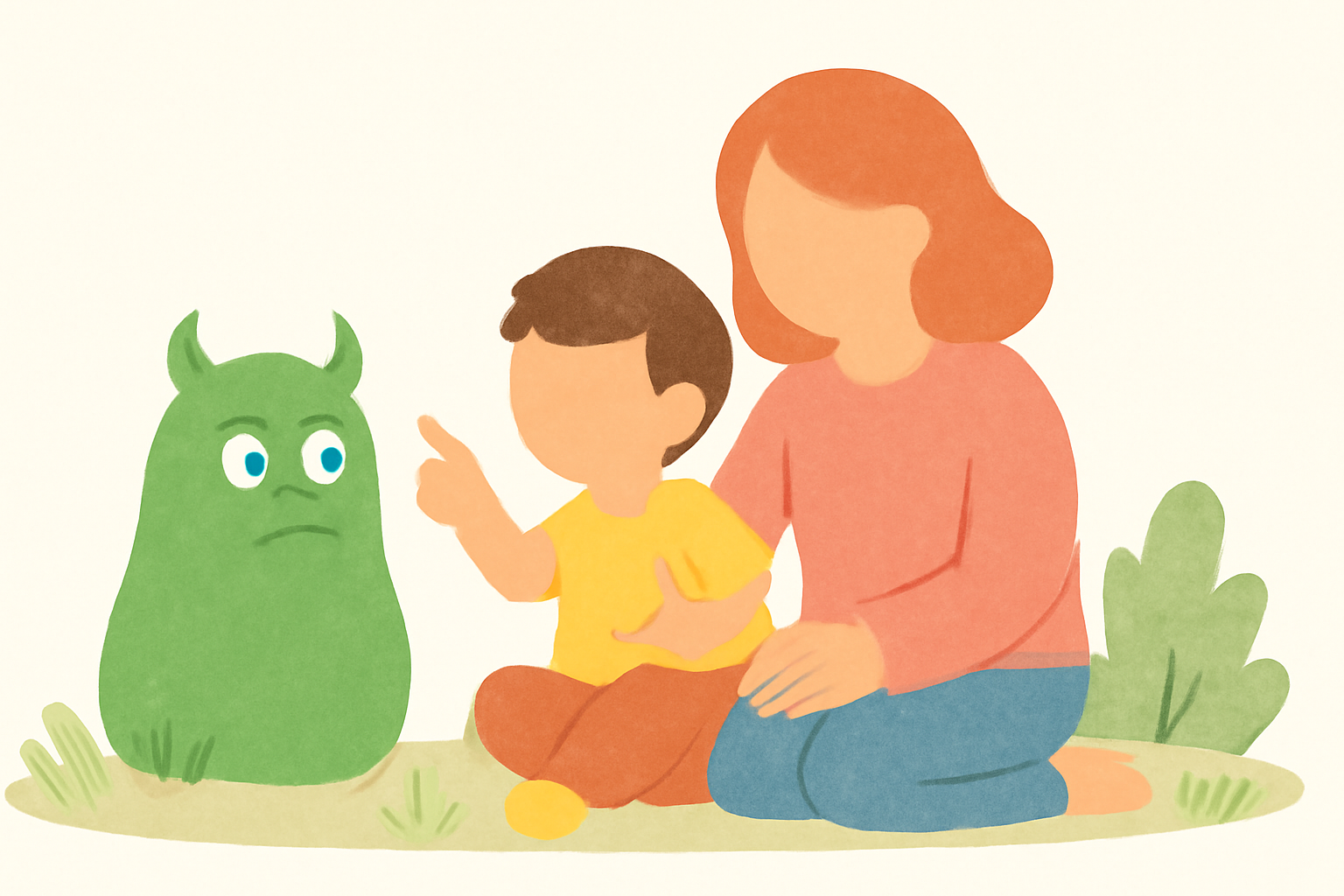
The Green-Eyed Monster activity is brilliant for four- and five-year-olds, who are starting to notice comparisons and experience social jealousy. Naming jealousy out loud, normalizing it («everyone feels this — it doesn't make you bad»), and then shifting to noticing something you do have, teaches children a sophisticated emotional move: acknowledge the hard feeling AND find something good. Both can be true at the same time.
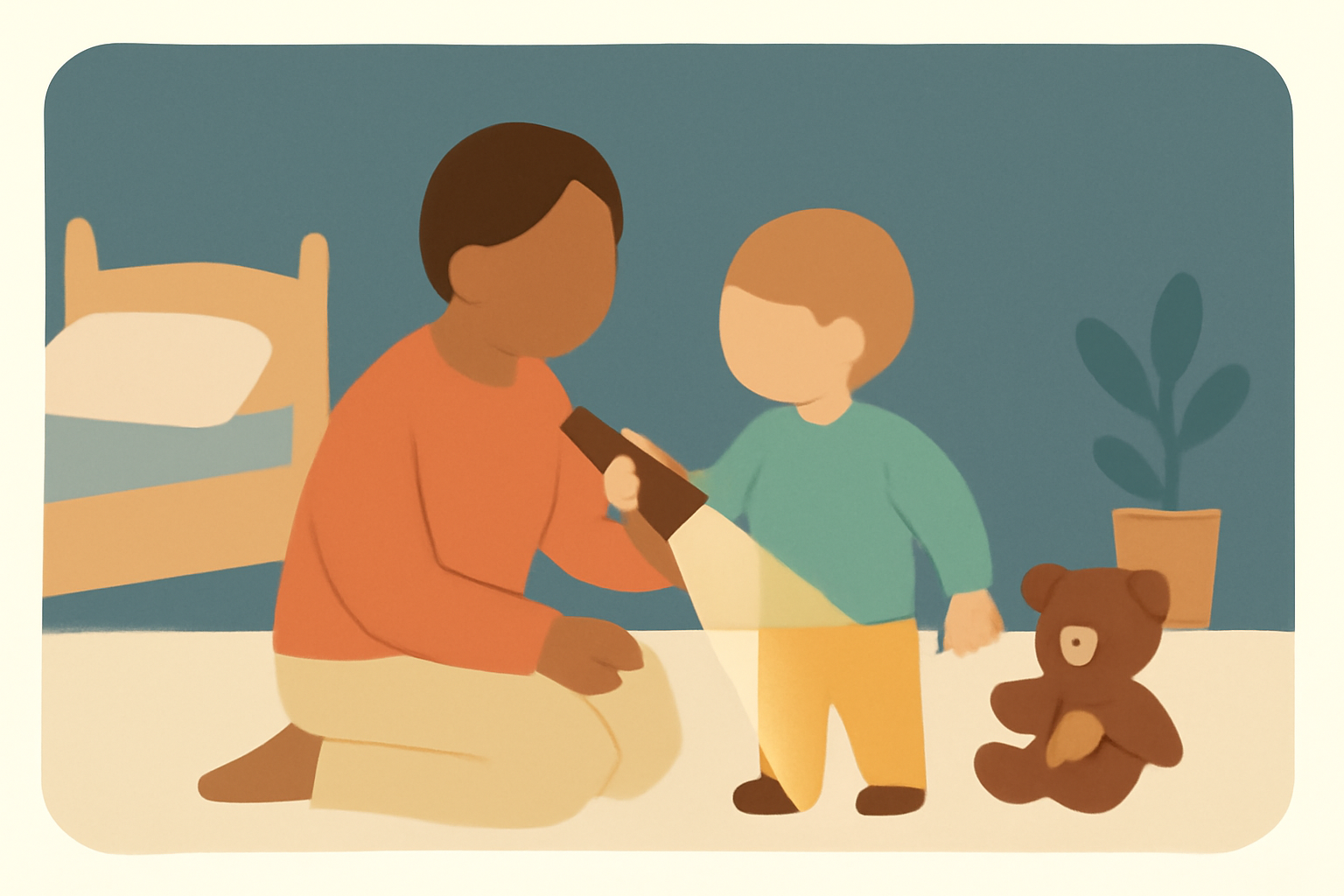
The Brave Bucket — where your child names something that feels scary or hard, tries it, and drops a token in a cup as proof — is also a wonderful fit for this age. The physical token is incredibly satisfying to a four-year-old, the accumulation of tokens is a visible reminder of courage built over time, and the distinction between «brave» and «not scared» («brave means doing it even when you're scared») is a concept that preschoolers can truly grasp and hold onto. The related Brave Flashlight activity — exploring a dimmed room with a flashlight and naming what they find — makes the concept of bravery visceral and immediate in a way that sticks.
How to Make It Part of Your Routine
The most important thing to know about building emotional intelligence in toddlers and preschoolers is that it doesn't require setting aside special time. The best emotional learning happens woven into the everyday rhythm of your life together. Here's how to make that feel natural rather than effortful.
Use transition times as emotional check-ins. The car ride home from daycare, the few minutes before bath, the walk to the park — these in-between moments are perfect for low-pressure emotional conversations. «What was the hardest part of your day? What was the best part?» You're not looking for a detailed report. You're building a habit of reflection.
Name your own emotions out loud. Your child is watching you constantly, and you are their primary model for how emotional life works. When you say «I'm feeling a little frustrated right now, so I'm going to take a deep breath» or «I felt so proud when I finished that project at work today,» you're teaching emotional vocabulary and modeling self-regulation in real time. No lecture required.
Anchor emotional activities to existing rituals. The Gratitude Moment slots naturally into dinnertime or bedtime. The Balloon Belly breathing is a beautiful bedtime wind-down. The Power Words mirror affirmation works brilliantly as part of a morning getting-ready routine. Attaching activities to things you already do means they actually happen, consistently, without requiring extra planning.
Treat real emotional moments as learning moments — not interruptions. When your little one melts down, it's easy to want to simply resolve the situation as fast as possible. But if you can slow down even slightly — name what you see, breathe together, talk through what happened afterward — you're turning a hard moment into the most powerful emotional lesson of the day. The Cool-Down Countdown, the Bounce Back conversation, the Real Sorry practice — these are all designed to be used in real time, not just as rehearsals.
Keep a low bar for what counts as an activity. Making funny faces at the breakfast table is a feelings lesson. Reading a picture book and asking «how do you think she feels?» is an empathy builder. Letting your child try to buckle their own shoes and waiting without jumping in is a self-efficacy activity. When you reframe ordinary moments as emotional growth opportunities, you realize you're already doing more than you think. Activities like Quiet Spy — sitting still for one minute together and counting sounds — take almost no setup and build the mindfulness and attentional control that underpin emotional regulation.
Celebrate the emotional wins, not just the task wins. When your child uses their words instead of grabbing, when they take a breath on their own, when they cheer for a sibling as in the Cheer Squad activity, when they ask for a hug using the words they practiced in Hug Recharge — name it. «You told me how you felt instead of yelling. That was really grown-up.» Children repeat what gets noticed.
Don't aim for perfection — aim for consistency. Emotional intelligence isn't built in a single profound conversation or a perfectly executed activity. It's built in hundreds of small, imperfect moments where your child sees that feelings are safe to talk about, that hard things pass, and that the people who love them will help them learn. Show up for those moments, even on your tired days. Especially on your tired days.
Building emotional intelligence in the toddler and preschool years is one of the most meaningful gifts you can give your little one — not because it makes childhood easier (though it does, gradually), but because it gives them the inner resources to navigate every stage of life that follows with more confidence, connection, and resilience.
Keep Reading
Get an activity like this every day
My Little Sparks sends you one fun, age-appropriate activity for your little one — completely free.
Try It Free